
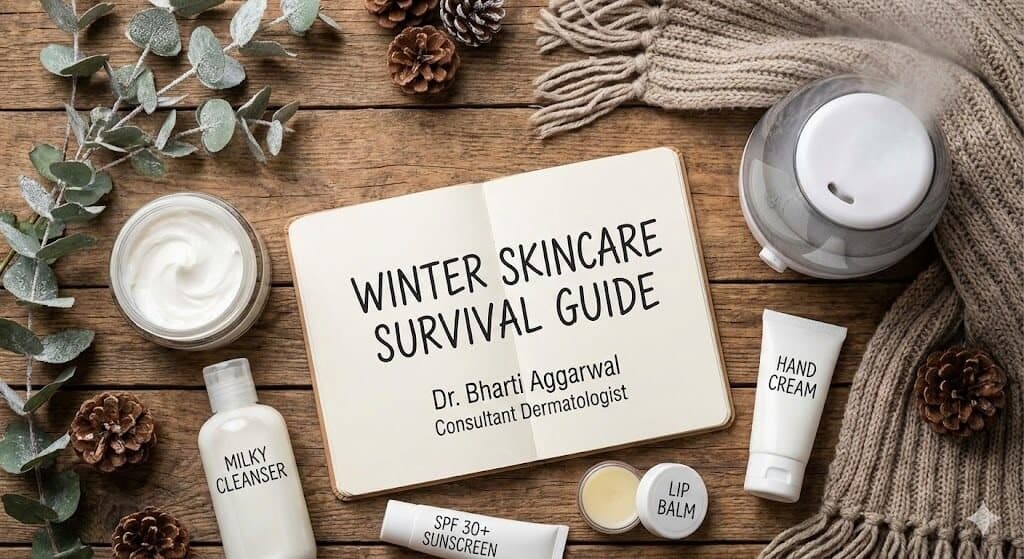
Winter is harsh on your skin. Learn the 5 essential products and strategies dermatologists recommend to keep your skin healthy, hydrated, and resilient during cold months.
As the temperature drops and the wool sweaters come out, you might notice an unwelcome change in your skin. It's not just in your head—winter is genuinely harsh on our largest organ.
As a dermatologist, I see a significant uptake in patients experiencing dryness, flaking, increased sensitivity, and even eczema flare-ups during the colder months. The culprit is a double whammy: cold outdoor air holds very little humidity, and cranking up indoor heating sucks even more moisture right out of the air—and consequently, right out of your skin.
When the air is dry, water evaporates more quickly from your skin surface. This weakens your skin's natural protective lipid barrier, leading to that tight, itchy sensation.
To keep your skin healthy, hydrated, and resilient this season, you don't need a complicated 10-step routine. You just need to focus on restoring and protecting that barrier. Here are the five non-negotiable essentials I recommend to all my patients for winter.
1. The "Heavy-Duty" Moisturizer (Switch from Lotion to Cream)
If you are still using the same lightweight gel moisturizer you used in July, it's time to switch. Winter demands richer textures. Think of lightweight lotions as a t-shirt for your skin, while thicker creams are like a heavy winter coat. We need products that not only add hydration (humectants) but also lock it in (occlusives).
What to look for:
Scan ingredient labels for three key components:
- Ceramides: These are lipids (fats) naturally found in skin that act like the mortar between bricks, holding your skin cells together to form a strong barrier.
- Hyaluronic Acid or Glycerin: These draw moisture into the skin.
- Shea Butter or Petrolatum: Heavier ingredients that sit on top of the skin to prevent water from evaporating.
2. A Gentle, Non-Stripping Cleanser
That "squeaky clean" feeling after washing your face? In winter, that's a bad sign. It means you have stripped away your natural oils, which are your first line of defense against winter dryness. If your current cleanser foams up significantly, it likely contains sulfates or strong surfactants that are too harsh for winter skin.
The Dermatologist Fix:
Switch to a creamy, milky, or oil-based cleanser. These formulas gently remove dirt and makeup without disrupting the delicate acid mantle of your skin. Your skin should feel soft—not tight—after towel drying.
3. Broad-Spectrum Sunscreen (Yes, Even in December)
This is the step most people skip once summer ends, and it is the biggest mistake you can make for long-term skin health. The sun's UVB rays (the ones that cause burning) are weaker in winter, but UVA rays (the ones responsible for premature aging and skin cancer) are present year-round at almost the same intensity.
They can penetrate clouds and even window glass. Snow also reflects up to 80% of the sun's UV rays, nearly doubling your exposure.
The Rule:
If it is light enough to see outside without a flashlight, you need sunscreen. Stick to an SPF of at least 30 every single morning on exposed skin.
4. The Environment Modifier: A Humidifier
Sometimes the best skincare product isn't something you put on your skin, but something that changes the environment around it. Central heating systems are incredibly efficient at drying out the air in your home, often dropping indoor humidity levels below 30%. When the air is that dry, it acts like a sponge, pulling moisture from wherever it can get it—including your skin.
My Recommendation:
Run a cool-mist humidifier in your bedroom while you sleep. Aim to keep indoor humidity between 40% and 60%. This simple step helps your skin naturally retain moisture overnight, so you wake up feeling less parched.
5. Targeted Occlusives for Lips and Hands
Your lips and hands take the biggest beating in winter. The skin on your lips is incredibly thin and lacks oil glands entirely, making it incapable of moisturizing itself. Your hands, meanwhile, are constantly exposed to cold air and frequent washing, leading to cracked knuckles and painful dryness. Regular lotion often isn't enough here. You need thick "occlusives"—products that create a physical seal over the skin.
The Fix:
- For Lips: Avoid flavored balms, which can cause you to lick your lips more (which dries them out further). Look for plain petrolatum-based balms or ointments.
- For Hands: Keep a thick hand cream by every sink and apply it immediately after washing your hands while they are still slightly damp. For severely cracked hands, apply a thick ointment at night and sleep with cotton gloves on to lock in the moisture.
Final Thoughts
Winter skin doesn't have to be miserable skin. By focusing on gentle cleansing, heavy moisturizing, and sun protection, you can maintain a healthy glow all season long.
Disclaimer: This content is for informational purposes only and does not constitute medical advice. If you are experiencing severe cracking, bleeding, or persistent rashes that do not improve with over-the-counter care, please consult a board-certified dermatologist.
Dr. Bharti Aggarwal is a Consultant Dermatologist who founded Skintressa to provide evidence-based, personalized care at Skintressa – Advanced Skin, Hair & Laser Clinic.
Ready to Transform Your Skin?
Schedule your consultation at Skintressa today and experience personalized dermatological care from Dr. Bharti Aggarwal.
Book Your AppointmentContinue Reading

When Should You See a Dermatologist? 10 Skin Signs You Should Not Ignore
Early intervention prevents complications and ensures better outcomes. Learn the 10 critical signs that should prompt you to schedule a dermatology consultation.

Hair Fall in Men and Women: What Is Normal and What Is Not?
Understanding what's normal versus what requires intervention is the first step to protecting your hair. Learn about causes, treatments, and when to seek help.